
CapabilitiesRobot data capture

03 · EMBODIED AI DATA

Capture the point of view
that trains the robot.

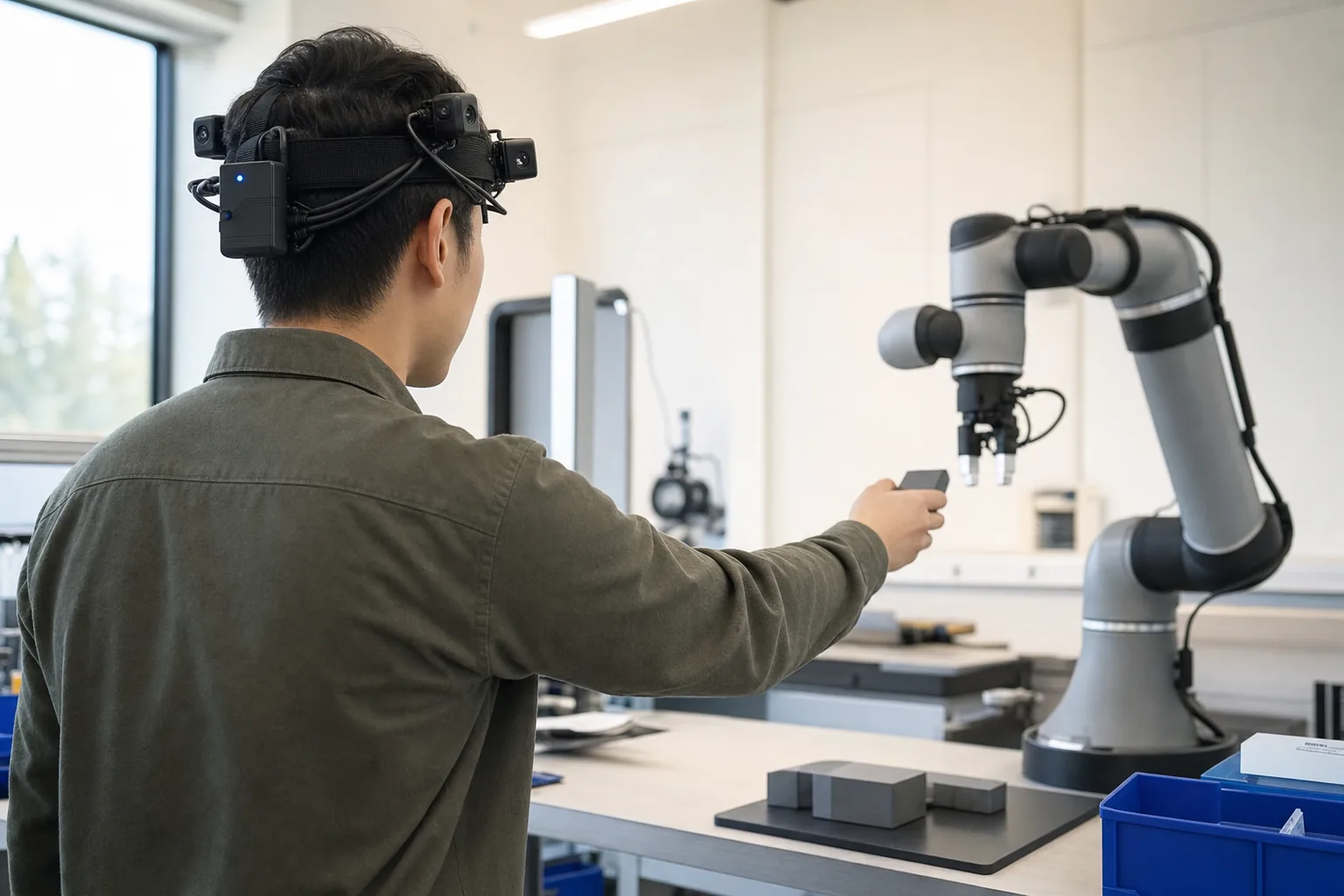
First-person capture systems for robot demonstrations, imitation learning and multimodal datasets. Built around synchronized visual, inertial and audio signals.

Operator using a head-mounted EGO camera system near a robot arm

CAPTURE SIGNAL PATH

Reliable robot data begins with a camera system that records the action as it actually unfolds.

01

CAMERA CONFIGURATIONS

Global-shutter multi-camera configurations

5 / 6 / 8
02

HARDWARE SYNC

Hardware synchronization with sub-millisecond precision

< 1 ms
03

MULTIMODAL STREAMS

RAW video, IMU and audio data paths for research workflows

RAW + IMU + AUDIO

Data collection work

Capture demonstrations as training-ready signals.

Embodied AI data is useful only when timing, perspective and context remain connected through the collection workflow.

01

Imitation learning

First-person recordings preserve the visual decisions and hand motion behind a successful demonstration.

02

Teleoperation studies

Synchronized multi-sensor capture makes it easier to relate operator behavior to robot outcomes.

03

Dataset expansion

A repeatable rig turns occasional recordings into a scalable protocol for research teams and operators.

PROJECT OUTPUTS

Data-system outputs

The system is delivered with the details that make a data day reproducible.

Capture configuration

Camera placement, lens choice, synchronization and storage flow matched to the task.

Calibration protocol

Practical checks that maintain multi-camera consistency between collection sessions.

Collection playbook

Operator guidance, metadata expectations and data handoff steps for the dataset team.

PROJECT PATH

Progress with evidence, not assumptions.

  1. 01

    Observe the task

  2. 02

    Build the sensor rig

  3. 03

    Prove signal integrity

  4. 04

    Scale the protocol

ENGINEERING QUESTIONS

The conversations that shape the system.

01Why use first-person cameras for robot data?

They preserve task-relevant viewpoint and timing that stationary cameras often miss during hands-on demonstration.

02Can audio and IMU be captured with video?

Yes. The capture architecture is defined around the multimodal streams that the training workflow needs.

03How is synchronization verified?

We specify hardware synchronization and include test conditions that make drift, latency and dropped-frame risks visible.

ORIVERX / CAPABILITIES / 03

Build the next vision system
with us.